Bayesian Neural Network for Demand Response Pricing
Advanced time-series forecasting model for energy price prediction using a Bayesian neural network.
Python · PyTorch · Pandas · Time Series Analysis · API Integration
Read PaperOverview
The project addressed a critical challenge facing energy retailers: forecasting electricity consumption based on day-ahead market pricing during periods of extreme price volatility, such as those caused by COVID-19 and the Russian invasion of Ukraine. Energy retailers must purchase energy from volatile wholesale markets while committing to fixed-price contracts with customers, creating significant financial risk during price shocks.
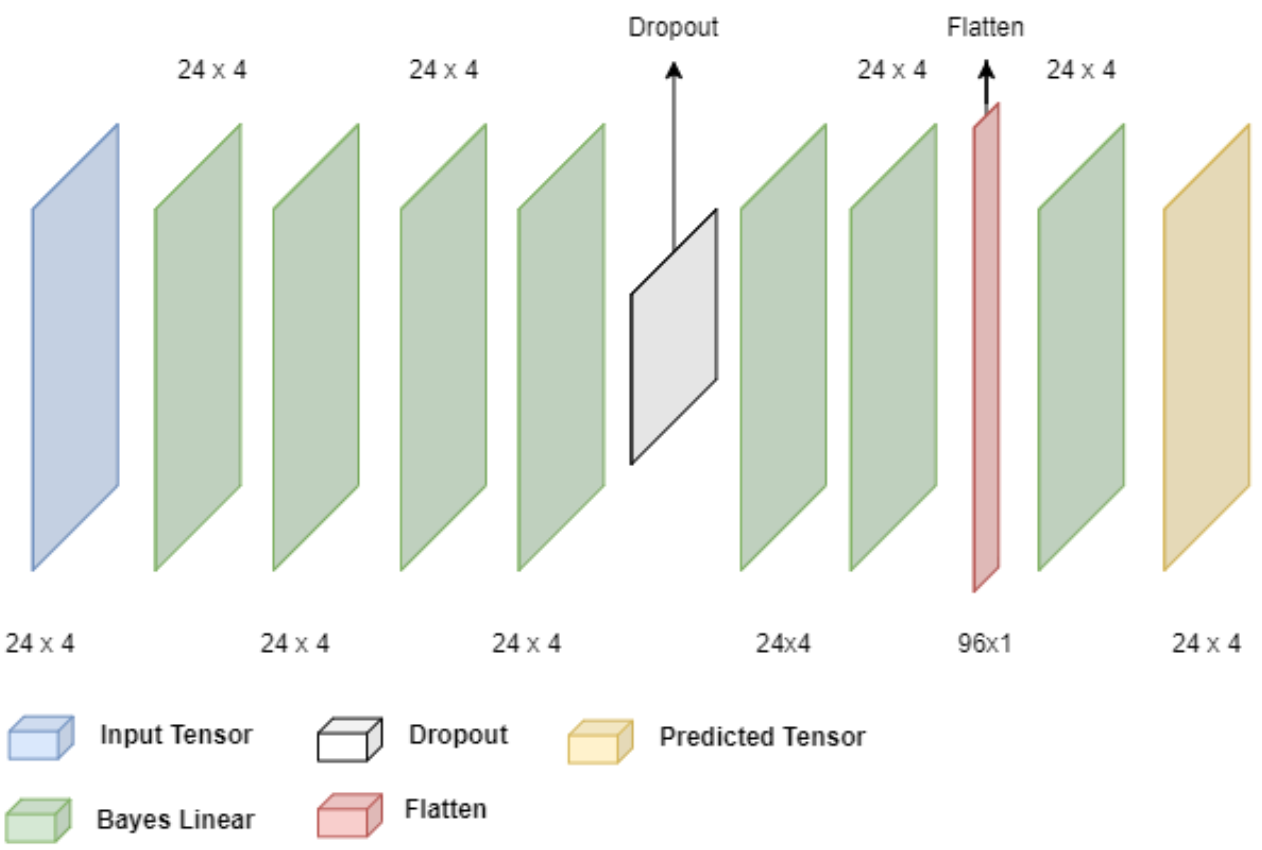
I developed a BNN incorporating Bayesian Regularized Back Propagation (BRBP) and compared its performance against two alternative approaches: a deep learning neural network and a functional neural network. The models were tested on data from three countries—the Netherlands, Spain, and Sweden—using historical price and consumption data from ENTSO-E.
Technical Approach
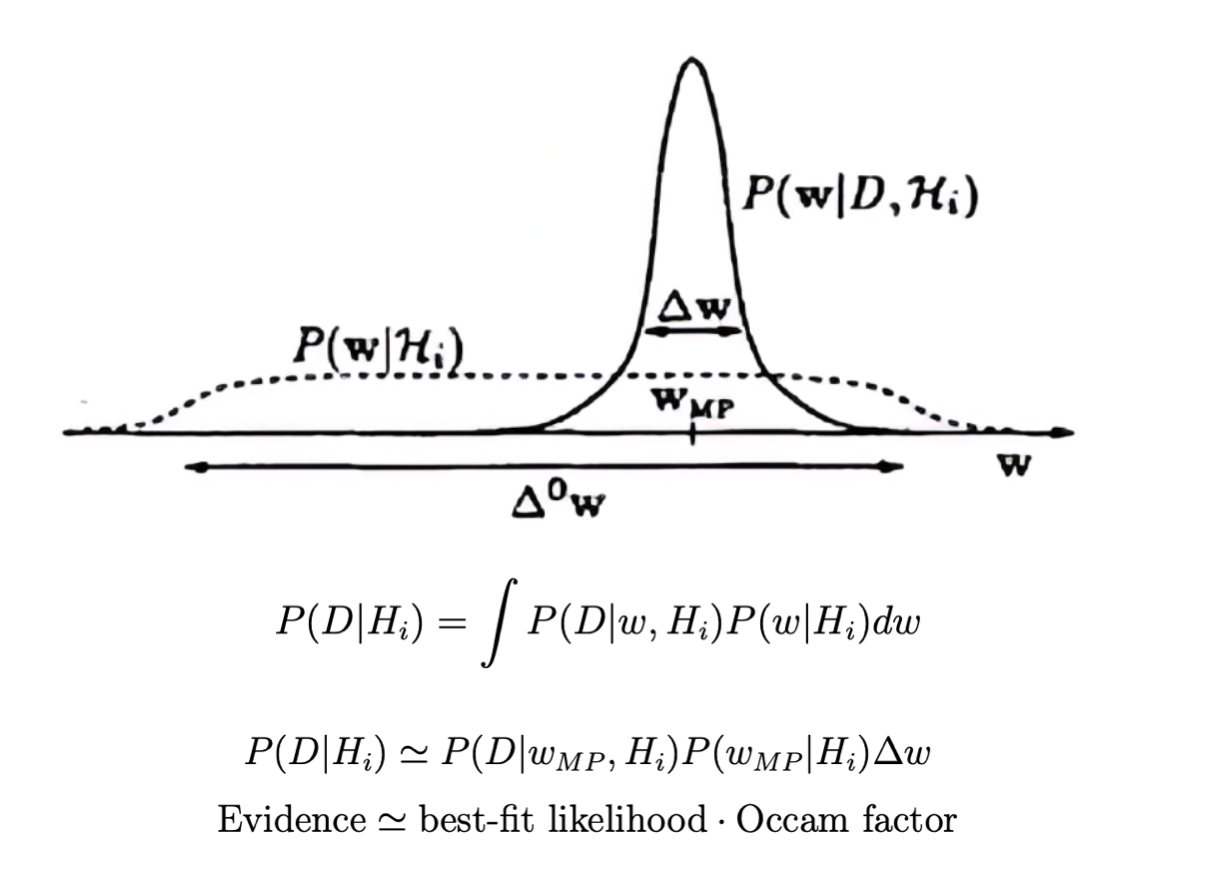
The BNN implementation utilized Bayesian Regularized Back Propagation, which operates on two levels of inference: model fitting and model comparison. The approach incorporates two unique hyperparameters: α (representing expected connection magnitude) and β (representing the noise level in the data). These parameters are automatically optimized through evidence maximization rather than manual tuning.
The Bayesian framework evaluates the evidence for each model configuration using the formula: Evidence ≈ best-fit likelihood × Occam factor. The Occam factor automatically penalizes overly complex networks by measuring how much the hypothesis space collapses when data is introduced, preventing overfitting while maintaining prediction accuracy.
Data and Features
The project used day-ahead energy pricing and consumption data spanning multiple years, including periods of significant market volatility. Volatility was quantified using a specialized formula for energy markets that accounts for the unique characteristic that electricity cannot be stored like other commodities. The data preprocessing pipeline prepared hourly price and load information, with 24-hour windows serving as the fundamental time unit for predictions.
Key Outcomes & Metrics
- BNN achieved MAPE scores of 12.7% (Netherlands), 7.9% (Spain), and 15.2% (Sweden) without hyperparameter adjustments
- Demonstrated superior transferability across different national energy markets compared to alternatives
- Deep learning network achieved better accuracy for Netherlands (9.2% MAPE) but required country-specific tuning and performed worse on other markets
Most Interesting Findings
The most compelling discovery was that the BNN's built-in 'Bayesian Occam's Razor' automatically penalized overly complex models, providing more consistent performance across volatile and non-volatile periods without overfitting. The BNN showed lower MAPE values at lower volatility levels compared to the deep learning approach, while both converged to similar performance during high volatility periods. The functional neural network approach provided unique interpretability advantages by visualizing the functional neural coefficients, allowing direct observation of how the network learns patterns in the data. However, this interpretability came at the cost of prediction accuracy compared to the BNN.
Practical Implications
The research demonstrated that Bayesian regularization successfully balanced generalization capacity with prediction accuracy—a key advantage for real-world deployment across diverse energy markets facing unpredictable price shocks. Unlike deep learning approaches that require extensive validation datasets and country-specific tuning, the BNN provides an objective framework for model selection and automatically determines optimal complexity levels. This makes it particularly valuable for commercial energy companies requiring reliable forecasting tools that function consistently across different market conditions and geographies.